
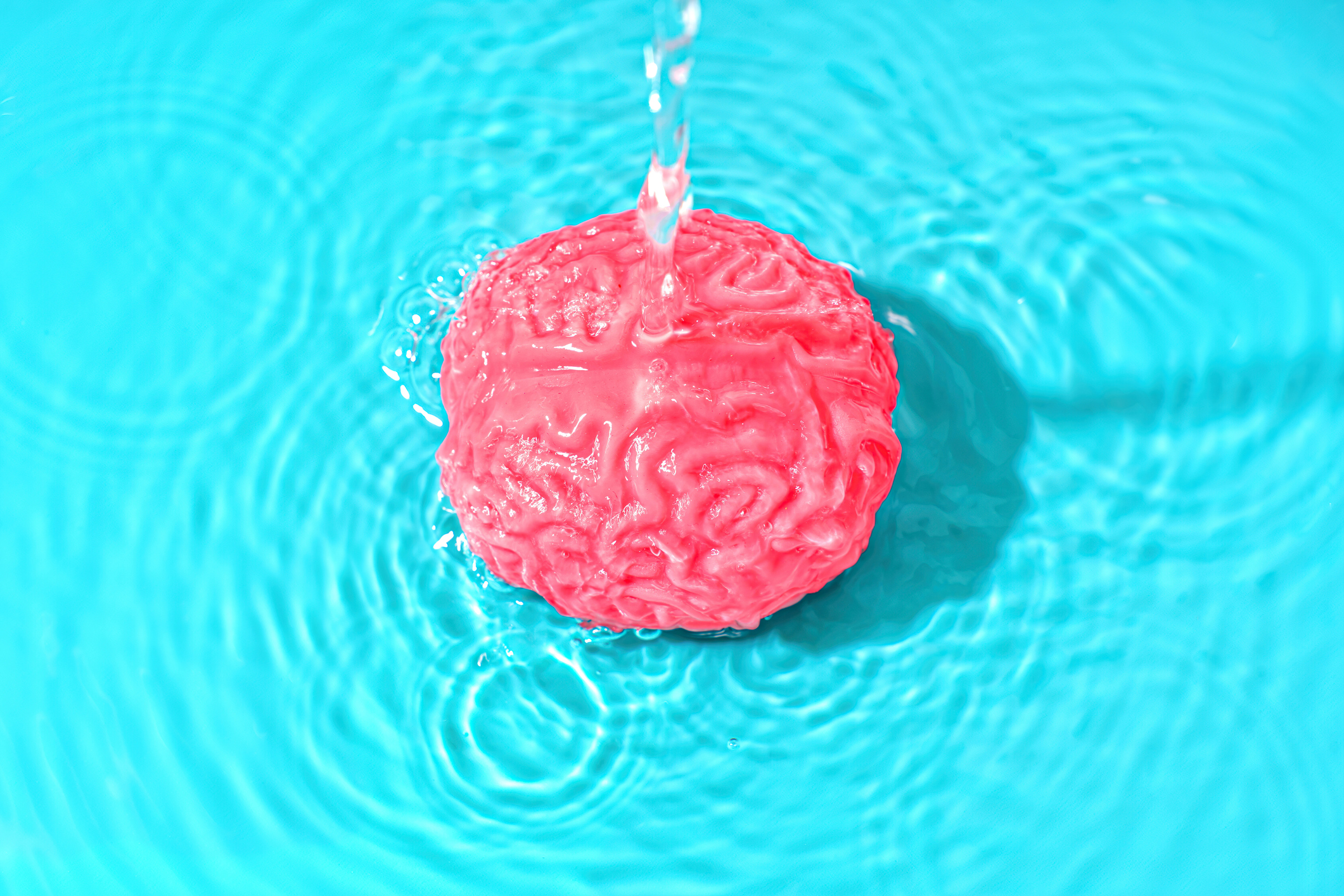
A few years ago, I wrote here about the ideal sleep position for turning on the “brain’s dishwasher.”
While we sleep, cerebrospinal fluid moves through the brain, helping wash away waste products and proteins linked to neurological diseases like Parkinson’s and Alzheimer’s.
But just as a dishwasher needs power to run, your brain’s cleaning process needs help moving that fluid along.
Now researchers are discovering where some of that power may come from — and the answer is surprisingly simple: movement.
In fact, the mechanism isn’t all that different from the hydraulics that help lift a car at your mechanic’s garage.
Hydraulics and your brain
Hydraulics works because liquids, unlike air, cannot be squeezed into a smaller space. Because they can’t be compressed, if you push on a liquid in a closed tube, that pressure is transmitted immediately and equally in all directions.
What’s more, the resulting power is much greater than the pressure exerted on the liquid.
Think of the hydraulic lift at your mechanic’s garage. One push of a button sets the hydraulic pump in motion, and your car is lifted into the air.
This same principle applies to the power steering in your car. It’s a hydraulic pump that lets you turn the wheel so easily, even though the tires are supporting a heavy automobile.

Peak Superfruits™
Blend of anthocyanin-rich, organic fermented fruits — including Aronia, Acia, Blueberry, Pomegranate and Plum — that can help clobber insulin resistance, and keep you healthy. MORE****〉〉**
«SPONSORED»
In a simulation using mice, scientists at Penn State University have identified a mechanism by which exercise is thought to benefit brain health, and it all comes down to hydraulics.
The abdominal contractions that occur during exercise compress blood vessels supplying both the spinal cord and the brain. This pressure appears to make the brain shift gently within the skull — just enough to help move cerebrospinal fluid around it.
In turn, cerebrospinal fluid flows over the brain and washes away brain-toxic proteins that have accumulated during the day.
Patrick Drew, Associate Director of the Huck Institute of Life Sciences at Penn State, explains it this way:
“In this study, we found that when the abdominal muscles contract, they push blood from the abdomen into the spinal cord, just like in a hydraulic system, applying pressure to the brain and making it move.
“Simulations show that this gentle brain movement will drive fluid flow in and around the brain. It is thought the movement of fluid in the brain is important for removing waste and preventing neurodegenerative disorders.
“Our research shows that a little bit of motion is good, and it could be another reason why exercise is good for our brain health.”

Peak PS™
Support Stong Cognition with One of the Most Tested Nutrients for Brain Health and Memory!
«SPONSORED»
Other ways to keep your brain healthy
Exercise is just one of the ways you can support your cognitive function as the years go by. Here are some others:
**Manage stress. **Chronic stress can negatively impact brain health. Try meditation, yoga, or deep breathing techniques.
**Improve your diet. **A 2015 study published in the journal Neurology found that older adults who had eaten a Mediterranean diet for a year or more had heavier brains and more gray and white matter than those who didn’t follow this type of diet. That’s why the Mediterranean diet is one of the go-to diets for Alzheimer’s prevention.
Eat more berries. In one study, eating blueberries for six months restored brain processing speed to normal.
**Guard your sleep. **If you’re getting less than five hours of good sleep per night, you’re at higher risk for dementia and death. Your brain needs a good night’s sleep for a good power wash.
Sources:
Brain motion is driven by mechanical coupling with the abdomen — Nature Neuroscience
Hydraulic brain: Body motion linked to fluid movement in the brain — Eureka Alert
12 ways to keep your brain young — Harvard Medical School
FAQ: Movement and Brain Cleaning
How does the brain clean itself?
The brain uses cerebrospinal fluid to help move waste products out of brain tissue. This process is especially active during sleep and is often described as the brain’s “dishwasher.”
How might movement help the brain clear waste?
New research suggests abdominal contractions during movement may compress blood vessels connected to the spine and brain. That pressure may cause gentle brain movement, helping cerebrospinal fluid circulate around the brain.
Does this mean exercise prevents Alzheimer’s or Parkinson’s?
No. The study suggests a possible mechanism that may support brain health, but it does not prove that exercise prevents neurodegenerative disease. Still, regular physical activity is one of the best-supported habits for maintaining cognitive function.
What kind of movement helps?
The study suggests even small abdominal contractions — the kind that happen when you walk, sit up or move your body — may create gentle brain motion. For overall brain health, regular walking, strength training, balance work and stretching are all good options.
What else helps protect brain health?
Quality sleep, stress management, a Mediterranean-style diet, regular physical activity and staying socially and mentally engaged are all linked to better cognitive aging.
Related
- 10 Minutes to Cancer Prevention? Exercise and Colon Cancer
- Low vitamin D linked to more pain after surgery — vitamin D surgery pain
- Leucine May Support Mitochondrial Function After 50 — Leucine mitochondrial function
- Vitamin D and depression: Meta-analysis finds a dose-response effect — vitamin D depression
- Peppermint Oil Lowered Blood Pressure in 20 Days — peppermint oil blood pressure
- Smart snacking: What to look for, what to skip, and why it matters
- Can serotonin worsen tinnitus? New research links SSRIs and ringing ears — SSRIs tinnitus
- Binge Drinking Triples Liver Scarring Risk
- More from Health Maxim Blog