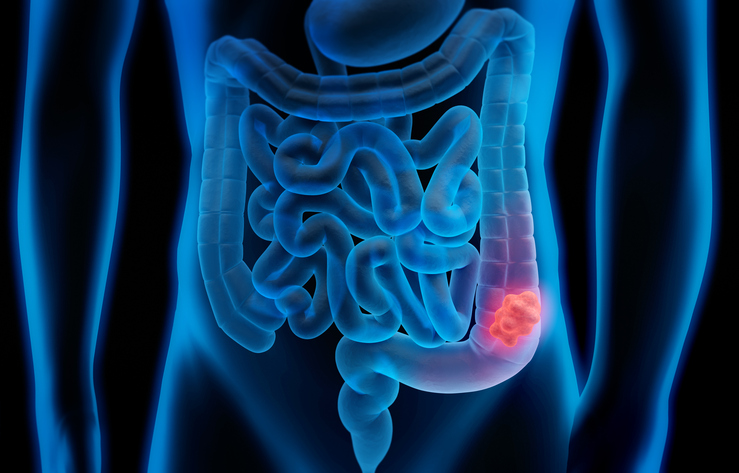

Up to 3 million Americans live with Inflammatory Bowel Disease (IBD) — an umbrella term for conditions including Crohn’s disease and ulcerative colitis.
Beyond the daily discomfort, IBD carries a serious hidden risk: people with IBD are significantly more likely to develop colorectal cancer, often at a younger age and with worse outcomes than the general population.
While there are some medications that treat IBD, it’s not clear if any of them reduce this risk. Investigators at Weill Cornell Medicine decided to delve into the precise mechanism driving this dramatic increase in colorectal cancer risk — and what they discovered could lead to a breakthrough in IBD treatment….
The pro- inflammatory protein at the core
The research began with a focus on TL1A, an inflammatory immune signaling protein that has been associated with both IBD and colorectal cancer. Experimental drugs that block TL1A activity have shown great promise against IBD in clinical trials, but it hasn’t been clear how the signaling protein promotes the disease and associated tumors.
In mouse studies, the team found that TL1A triggers a chain reaction in the gut. It activates a type of immune cell (called ILC3s), which then sends an emergency signal to the bone marrow to flood the gut with white blood cells called neutrophils. Once there, these neutrophils are “reprogrammed” in a way that actually helps tumors grow.
“These findings are important given the intense interest in the medical community to understand TL1A’s role in IBD and its potential role in associated colorectal cancers — for which we have had few strategies to mitigate the cancer risk,” says study senior author Dr. Randy Longman, a professor at Weill Cornell Medicine.
Here’s how the domino effect works: TL1A is produced by immune cells in the inflamed gut. It activates ILC3 cells, which release a chemical signal that tells the bone marrow to rapidly produce more neutrophils. Those neutrophils then rush to the gut — and in mouse models, simply adding more of these cells was enough to trigger tumor development.
These neutrophils cause damage in two ways: they release harmful molecules that can damage DNA in the gut lining, and they are switched into a mode that actively encourages tumors to form and grow. Importantly, the same pattern was found in gut tissue samples from real IBD patients — and it was much less pronounced in patients who received an experimental drug that blocks TL1A.
In short: a single protein (TL1A) can set off a chain reaction that floods the gut with cancer-promoting white blood cells — which may explain why IBD patients face a higher risk of colorectal cancer.
What this means for future treatments
The findings open up several new targets for treatment. Blocking TL1A is already being explored, but the ILC3 cells and the neutrophils they recruit could also become targets — potentially leading to earlier, more precise treatments that not only manage IBD but also actively reduce the cancer risk.
“I think it will be exciting for clinicians in the IBD field to know that there is a systemic process at work here, involving both the gut and the bone marrow, with the potential to drive precision medicine in IBD,” says lead author Dr. Sílvia Pires of Weill Cornell Medicine.
The researchers are currently conducting further studies of this cell communication pathway in the context of gut inflammation, including the potential early role of occasional GM-CSF exposure in sensitizing marrow cells in a way that increases the likelihood of IBD.
New therapies based on this research are still years away. But if you have IBD right now, there’s one practical step you can take today: cut fructose from your diet. This common sugar has been shown to worsen colon inflammation and disrupt the balance of gut bacteria.
A great way to cut out fructose and other gut-irritating sugars is to follow a low FODMAP diet. FODMAP stands for Fermentable Oligo-Di-Monosaccharides and Polyols — basically a more scientific name for different carbohydrates (sugars) found in foods, including fructose.
The results speak for themselves: in one study, 61% of people with IBS on a low FODMAP diet reported a major improvement in quality of life, compared to just 27% of those following a standard healthy diet.
You can find more advice for following a low FODMAP diet at IBS Diets.
Sources:
1. Discovery Illuminates How Inflammatory Bowel Disease Promotes Colorectal Cancer — Weill Cornell Medicine
2. Innate lymphoid cells activated by the cytokine TL1A link colitis to emergency granulopoiesis and the recruitment of tumor-promoting neutrophils — Immunity
3. Why chronic gut inflammation can turn into colon cancer — ScienceDaily