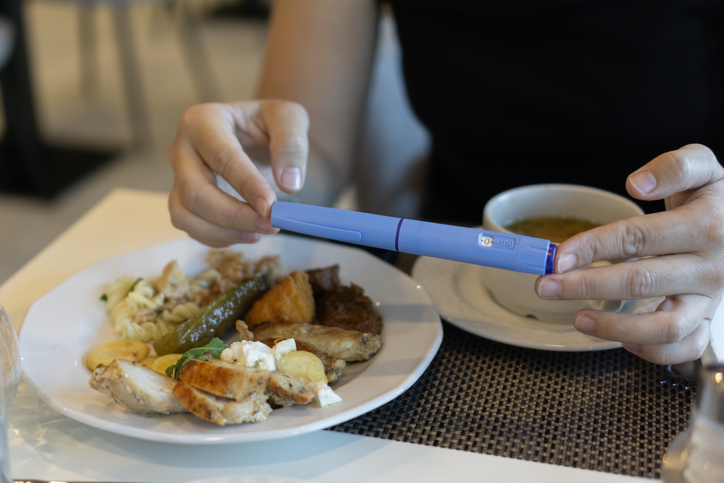

For many people, drugs like Ozempic and Wegovy feel like a miracle after years of struggling to lose weight.
But everything is not coming up roses when it comes to GLP-1 drugs…
In fact, studies have started trickling in, warning that these medications can lead to unexpected and unwelcome side effects, such as gum disease and shrinking hearts.
On top of that, the weight loss achieved with GLP-1s may not even be worth the mildest risks, considering that once patients stop taking them, the weight boomerangs right back.
Now, new research from the University of Cambridge is piling on to the list of potential dangers caused by these drugs.
And it’s raising an important, often-ignored question: What happens when appetite decreases, and the body stops getting the nutrients it needs to stay strong?
Here’s the scary answer to that question…

«SPONSORED»
How GLP-1 drugs work
Before we get to the research, it’s important to understand how drugs like Ozempic and Wegovy work.
These medications belong to a class of drugs called GLP-1 receptor agonists.
GLP-1 agonists mimic a natural hormone that:
- Slows stomach emptying
- Reduces appetite
- Makes you feel full faster
These are all good for weight loss because they naturally lead you to eat less. However, that benefit comes with a hidden downside…
When your total food intake drops dramatically, your nutrient intake does too, leaving you at risk of serious health problems most hope to avoid even in old age…
Osteoporosis, hair loss, fatigue and more
A team of scientists at the University of Cambridge has warned that many people taking these medications are losing weight without getting proper nutritional guidance. As a result, users are facing preventable risks, such as vitamin and mineral deficiencies and muscle loss.
According to the researchers, when taking GLP-1 drugs, calorie intake can drop by 16-39%, causing weight to go down dramatically. But as much as 40% of the total weight lost during treatment is lean body mass, which includes muscle.
Beyond the weight itself, the scientists say that people taking Ozempic and Wegovy are also losing:
- Muscle
- Bone support nutrients (vitamin D and calcium)
- Energy-producing vitamins
- Electrolytes, such as the essential minerals sodium, potassium, magnesium, calcium, chloride and phosphorus.
And they warn that low intake of key vitamins and minerals can increase the risk of fatigue, weakened immune function, hair loss and osteoporosis.
To top it off, loss of lean mass, most often muscle, also raises the likelihood of weakness, injuries and falls.
Not really the weight loss triumph you signed up for, right?
As lead researcher, Dr. Marie Spreckley, points out, “Use of GLP-1 receptor agonist therapies has increased rapidly in a very short period of time, but the nutritional support available to people using these medications has not kept pace. Many people receive little or no structured guidance on diet quality, protein intake, or micronutrient adequacy while experiencing marked appetite suppression.
“If nutritional care is not integrated alongside treatment, there’s a risk of replacing one set of health problems with another, through preventable nutritional deficiencies and largely avoidable loss of muscle mass. This represents a missed opportunity to support long-term health alongside weight loss.”

«SPONSORED»
Lose the weight, not the nutrients
The good news is you can lose weight without trading one set of health problems for another, by following Dr. Spreckley’s advice. Make nutrition a priority by following an overall healthy, nutritious diet.
One that fits that bill is the Mediterranean diet. Key staples include beans, lentils, chickpeas, nuts (almonds, walnuts), seeds, Greek yogurt, feta/ricotta cheese, eggs, lean poultry and fatty fish, like salmon.
The spices used in the Mediterranean diet also have a reputation for supporting blood sugar metabolism.
There are plenty of natural options for extra help with weight loss…
First, consider adding more beta-glucan fiber to your diet. It acts like a GLP-1 agonist yet is naturally healthy.
Next, leverage the power of black cumin, which researchers believe inhibits adipogenesis — the formation of mature fat cells to support metabolism and a healthy weight.
You may want to consider berberine, a plant-based compound shown to support blood sugar metabolism and weight loss. A 12-week study involving people with obesity found that taking 500 mg of berberine three times a day resulted in an average 5-pound weight loss.
Finally, to support healthy, safe weight loss, follow these action steps:
- Make protein a priority at every meal. It protects muscle and metabolism.
- Don’t skip meals entirely. Small, nutrient-dense meals work better than not eating.
- Monitor key nutrients with your provider, especially vitamin D, iron and magnesium.
- Add resistance training. It tells your body to keep its muscles.
- Hydrate intentionally. Low appetite often means low fluid intake.
- Think nourishment, not just weight loss. Your goal is strength, energy and longevity.
Remember, healthy weight loss isn’t just about numbers on a scale. It’s about doing it in a way that keeps you strong, energized, and truly vital for decades to come.
Sources:
The overlooked nutrition risk of Ozempic and Wegovy — ScienceDaily
Nutrition Strategies for Next-Generation Incretin Therapies: A Systematic Scoping Review of the Current Evidence — Wiley Online Library
Weight loss drugs make it harder to get the nutrients you need—here’s what to do about it — Medical Xpress
9 Nutrient Deficiencies to Watch for If You’re Taking a GLP-1 Drug — Health